



The Science Behind Sintered Stone – Understanding Its Material Composition and Performance
Sintered stone, known for its durability, elegance, and sustainability, has become one of the most advanced surface materials in modern architecture and interior design. Its secret lies in the carefully engineered mineral composition and high-temperature sintering process, which together create a surface that is both beautiful and virtually indestructible.
1. Quartz – The Source of Hardness and Scratch Resistance
Quartz (SiO₂) typically accounts for 35–45% of sintered stone composition. It is one of the hardest natural minerals, giving the slab a Mohs hardness above 6, which allows it to resist daily scratches from knives, tools, or furniture. This is why sintered stone surfaces stay smooth and glossy for years without losing their shine.
2. Feldspar – The Secret to Density and Gloss
Feldspar acts as a fluxing agent, promoting the fusion of minerals at high temperatures (around 1,200°C). This gives sintered stone its dense, vitrified structure and natural shine. The result is a surface that's not only non-porous and stain-resistant, but also more dimensionally stable than natural stone.
3. Kaolin and Clay – Building Strength and Toughness
Kaolin and refined clays provide plasticity and mechanical strength, preventing cracking during production and installation. They also improve the flexural strength (typically >45 MPa), making sintered stone ideal for large-format applications such as walls, countertops, and furniture.
4. Alumina and Calcium Carbonate – Enhancing Resistance and Stability
Alumina (Al₂O₃) increases thermal and chemical resistance, ensuring color stability even under UV exposure or temperature changes. Calcium carbonate regulates thermal expansion and surface gloss, allowing the surface to maintain its luster without cracking or fading.
5. Pigments and Mineral Additives – Creating Color and Character
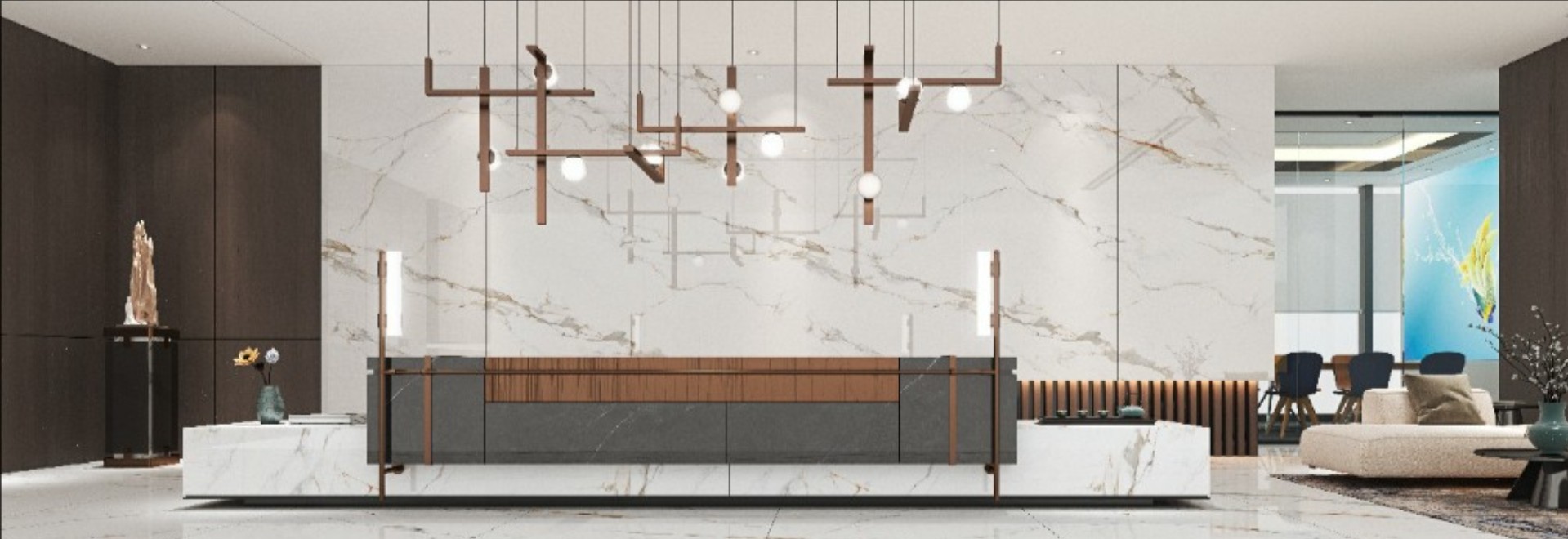
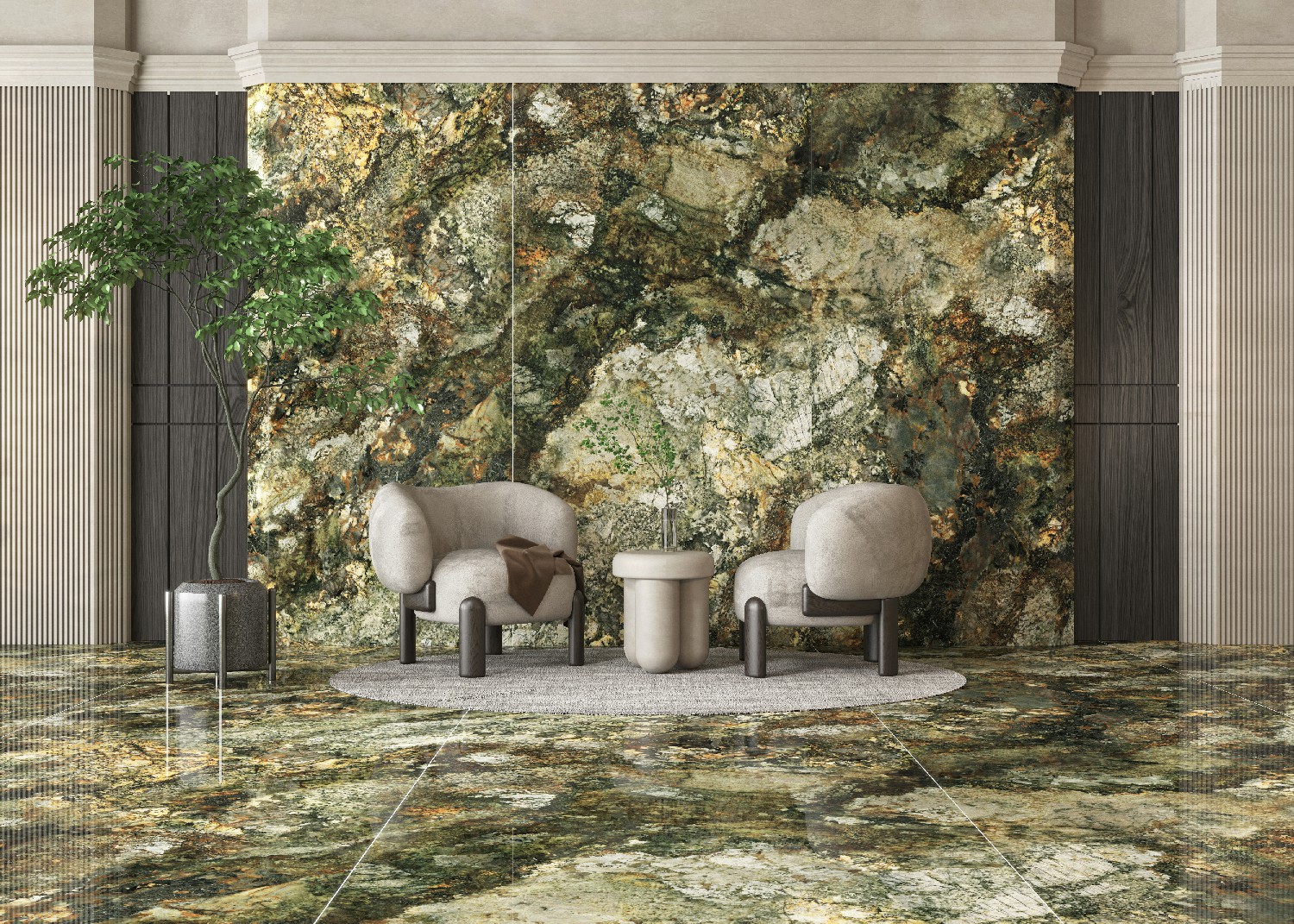
Sintered stone's aesthetic appeal comes from natural oxide pigments like iron, titanium, and cobalt. These produce marble-like veining, warm wood tones, or gemstone hues without fading. Tiny mineral additives also reduce micro-porosity, ensuring 0% water absorption and a bacteria-resistant surface.
6. Result: A Surface of Science and Art
By precisely balancing these ingredients, sintered stone achieves a perfect harmony of hardness, density, and beauty. It offers A1 fire-resistance, zero porosity, and UV stability, making it one of the most advanced and eco-friendly materials in today's design world.